
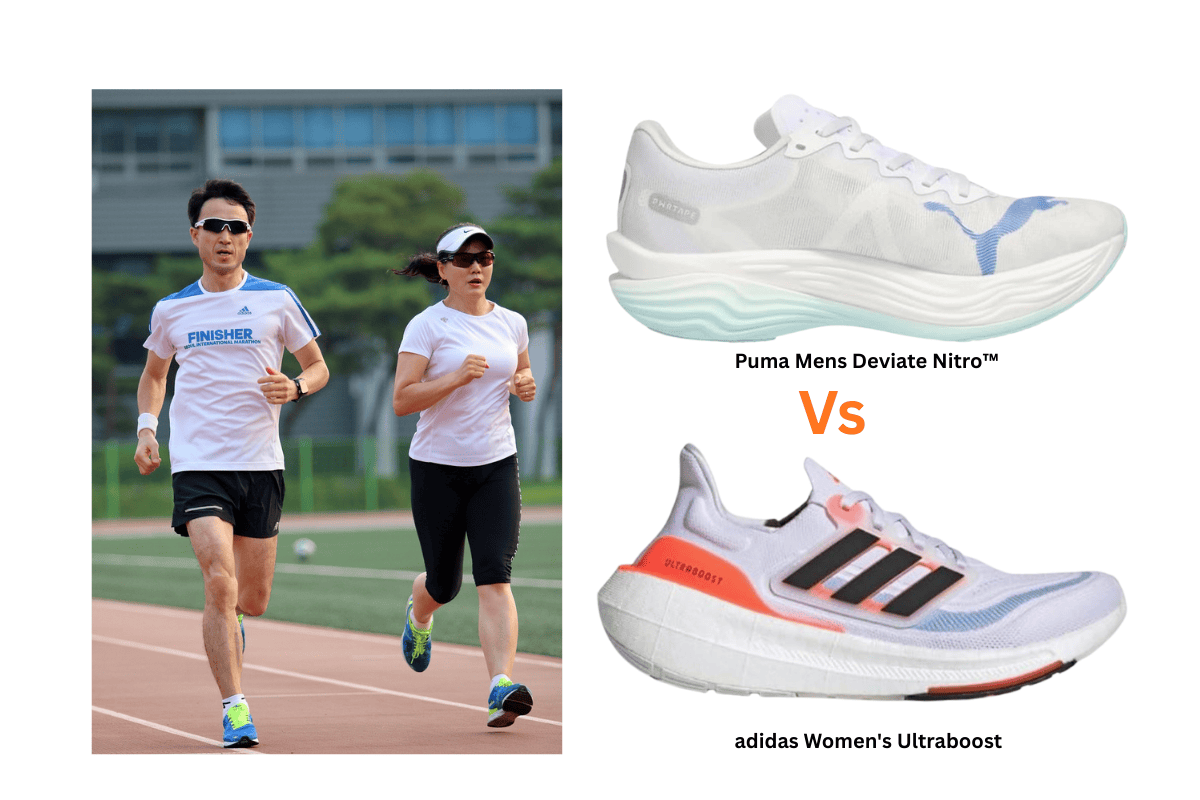
Puma Vs Adidas running shoes? Compare cushioning, durability, fit, and performance in this 2025 guide. Find the best running shoes for U.S.
When it comes to popular running brands in the U.S., Puma and Adidas consistently deliver performance, style, and innovation.
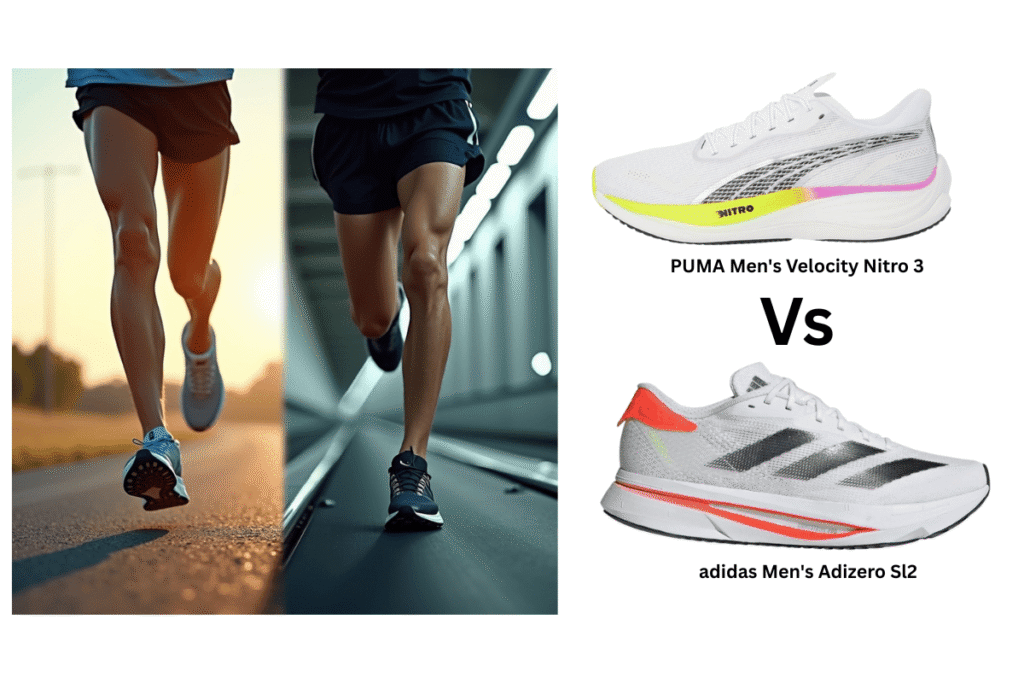
- Puma has become known for lightweight, responsive shoes like the Deviate Nitro Elite and Velocity Nitro 3, which combine racing performance with daily training comfort.
- Adidas has built its reputation with BOOST and Lightstrike foams, producing iconic shoes like the Ultraboost, Adizero Boston, and 4D series. Adidas blends performance, cushioning, and trendy lifestyle appeal for U.S. runners.
Table of Contents
Puma Vs Adidas Comparison:
Puma Running Shoes – Key Features, Pros & Cons
🔹 Key Features
- Cushioning Tech: Nitro foam and Pebax plates for a lightweight, responsive ride.
- Top Models in 2025:
- Deviate Nitro Elite – Marathon and race-day shoe with carbon plate
- Velocity Nitro 3 – Lightweight daily trainer
- Liberate Nitro 2 – Stability-focused trainer
- Fit: Snug midfoot with a slightly narrow toe box; designed for performance and speed.
✅ Pros of Puma Running Shoes
- Extremely lightweight and responsive
- Innovative Nitro foam delivers energetic propulsion
- Carbon plate options for racing
- Sleek, modern designs appeal to younger U.S. runners
❌ Cons of Puma Running Shoes
- Narrow fit may not suit wide feet
- Limited durability for heavy mileage
- Smaller lineup compared to Adidas
Explore Puma’s full collection on the official Puma website.
Adidas Running Shoes – Key Features, Pros & Cons
🔹 Key Features
- Cushioning Tech: BOOST, Lightstrike, and 4D foams for comfortable, responsive rides
- Top Models in 2025:
- Ultraboost 23 – Maximum cushioning for daily runs
- Adizero Boston 12 – Racing and tempo trainer
- Falcon 3.0 – Lightweight daily trainer
- Adidas 4D Run 2.0 – Futuristic cushioned shoe with 3D-printed midsole
- Fit: True-to-size, accommodates wider U.S. foot profiles
✅ Pros of Adidas Running Shoes
- Excellent cushioning with long-lasting BOOST foam
- Variety of shoes for speed, training, and recovery
- Trendy designs suitable for running + lifestyle wear
- Wide fit options for U.S. runners
❌ Cons of Adidas Running Shoes
- Some models heavier than Puma racing shoes
- Carbon-plated models can be expensive
- 4D technology has limited availability and higher price
Puma vs Adidas running shoes – Head-to-Head Comparison 2025
| Feature | Puma | Adidas |
|---|---|---|
| Cushioning | Nitro foam, Pebax plate | BOOST, Lightstrike, 4D foams |
| Durability | Moderate | High for daily trainers |
| Racing Models | Deviate Nitro Elite | Adizero Boston, 4D Run |
| Stability | Moderate | Good with Ultraboost / SL series |
| Fit | Snug, slightly narrow | True-to-size, wider options |
| Price Range | $120 – $250 | $110 – $270 |
| Best For | Speed, racing, light mileage | Daily training, stability, lifestyle |
Buying Guide – How to Choose Between Puma and Adidas
- Consider Your Running Goals
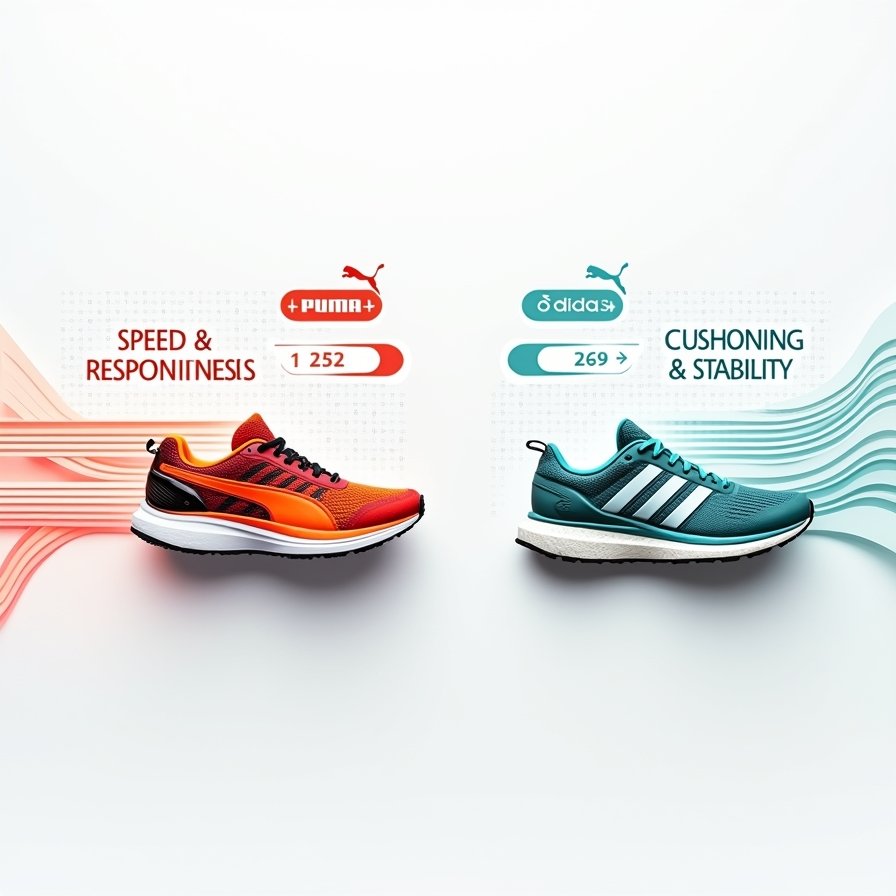
- Puma: Best for runners seeking lightweight, responsive shoes for speed or racing
- Adidas: Perfect for runners needing cushioning, stability, and versatility
- Foot Type & Fit
- Puma: Narrower fit; ideal for neutral runners
- Adidas: True-to-size; better for wide U.S. foot shapes
- Mileage & Durability
- Puma: Excellent for race day or short tempo runs; moderate durability
- Adidas: Durable, long-lasting daily trainers with comfortable cushioning
- Racing vs Training
- Puma Deviate Nitro Elite: Marathon or race-day performance
- Adidas Adizero Boston / 4D Run: Speed workouts and tempo runs
- Budget Considerations Both brands are premium; Adidas offers more daily trainers in mid-tier pricing, Puma focuses on lightweight racing and innovative foam tech.
FAQs – Puma vs Adidas running shoes
Q1. Are Puma running shoes good for long-distance running?
Yes, models like the Deviate Nitro Elite provide excellent energy return for marathon distances, but moderate cushioning may not suit all runners.
Q2. Are Adidas shoes suitable for wide feet?
Yes, Adidas shoes like Ultraboost 23 and SL series offer wider fit options and more accommodating toe boxes.
Q3. Which brand is better for U.S. runners seeking speed?
Puma racing shoes with Nitro foam and carbon plates are slightly lighter and more responsive, ideal for short races and tempo runs.
Q4. Are Adidas 4D shoes worth the investment?
Yes, for runners seeking innovative cushioning, durability, and futuristic style, Adidas 4D Run shoes offer exceptional energy return, though at a premium price.
Q5. Which is better for everyday training?
Adidas offers more durable daily trainers like Ultraboost and SL series suitable for high-mileage U.S. runners.
Recommended Models for U.S. Runners in 2025
Puma
- Puma Men’s Alexion Cross Trainer – Carbon plate racing shoe
- Velocity Nitro 3 – Lightweight daily trainer
- Liberate Nitro 2 – Stability-focused trainer
Adidas
- Ultraboost 23 – Maximum cushioning
- Adizero Boston 12 – Racing and tempo trainer
- Falcon 3.0 – Lightweight daily trainer
- Swift Run Legacy – Innovative cushioned performance shoe
See our full “vs” series for more U.S.-runner comparisons: Asics vs Saucony | Hoka vs Brooks.
Conclusion
In 2025, the Puma vs Adidas running shoes debate depends on your running style and goals:
- Puma: Lightweight, responsive, and slightly narrower shoes ideal for speed, racing, and tempo runs. Perfect for runners looking for carbon-plate propulsion or energetic Nitro foam.
- Adidas: Cushioned, stable, and durable shoes suited for daily training, long-distance runs, and lifestyle wear. Ideal for U.S. runners with wider feet or high mileage needs.
Many runners combine both brands: Puma for races and speed sessions, Adidas for daily training and recovery runs. Choosing based on foot type, distance, and goals ensures optimal performance and comfort.



Pingback: The Best Adidas Running Shoes in 2025 - clicknownusa.com