
On Run Vs Nike running shoes? Compare cushioning, durability, fit, and performance in this 2025 guide. Discover the best running shoes for U.S. runners, plus top models and buying tips.
Table of Contents
Introduction
In the competitive U.S. running market, On Run vs Nike Running Shoes stand out as two of the most innovative brands.
- On Run is known for its CloudTec sole technology, delivering soft landings with explosive take-offs. Popular models like the Cloudswift and Cloudboom provide speed, comfort, and futuristic design for runners seeking unique running experiences.
- Nike continues to dominate with Air Zoom, React, and Vaporfly technologies, offering runners reliable cushioning, lightweight performance, and race-day innovations. Models like Nike Air Zoom Pegasus 42 and Vaporfly Next% 3 are mainstays for U.S. runners.
In this 2025 guide, we’ll compare On Run vs Nike running shoes on cushioning, fit, stability, performance, top models, and pricing, including affiliate links for purchase.
For more comparisons, see our Puma vs Adidas 2025 guide and Hoka vs Brooks 2025 comparison.
On Run Running Shoes – Key Features, Pros & Cons
🔹 Key Features
- CloudTec Sole Technology: Patented pods absorb impact and create a soft-to-firm propulsion for smooth strides
- Speedboard Plate: Provides responsive take-off, enhancing efficiency for tempo and racing
- Popular Models in 2025:
- Cloudswift – Daily trainer with cushioned responsiveness
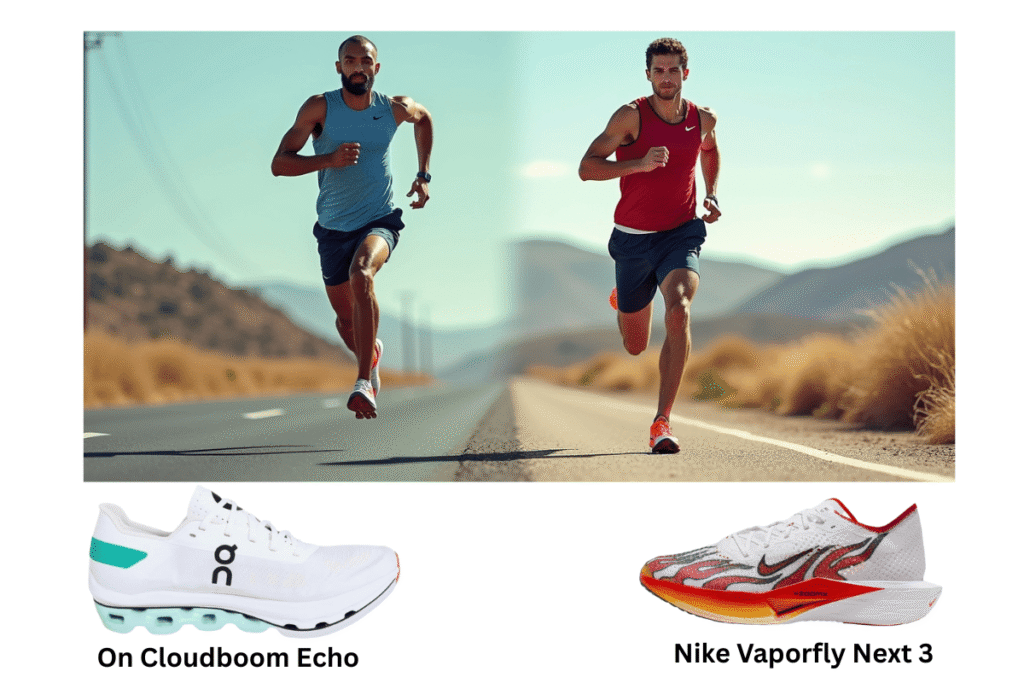
- Cloudboom Echo – Carbon-plated racing shoe
- Cloudmonster – Max-cushion daily training shoe
- Fit: True-to-size, accommodates U.S. foot profiles; slightly narrow heel for secure lock-in
✅ Pros of On Run Shoes
- Lightweight and responsive cushioning
- Innovative CloudTec technology provides soft landings with explosive push-off
- Ideal for tempo runs and racing
- Sleek, modern European designs
❌ Cons of On Run Shoes
- Moderate outsole durability for high-mileage U.S. runners
- Carbon-plated models are expensive
- Limited range compared to Nike
Explore On Run’s full collection on the official On website.
Nike Running Shoes – Key Features, Pros & Cons
🔹 Key Features
- Cushioning Tech: Air Zoom, React, and ZoomX foams for comfort and performance
- Popular Models in 2025:
- Air Zoom Pegasus 42 – Reliable daily trainer
- Vaporfly Next% 3 – Carbon-plated marathon racing
- React Infinity Run Flyknit 3 – Injury-preventive daily trainer
- Air Zoom Tempo NEXT% – Speed and interval workouts
- Fit: True-to-size with versatile width options for U.S. runners
✅ Pros of Nike Running Shoes
- Proven cushioning and durability for high-mileage runs
- Carbon-plated racing shoes for marathon and speed
- Wide variety of models for all U.S. runners
- Trendy designs suitable for running and lifestyle wear
❌ Cons of Nike Running Shoes
- Some models heavier than On Run racing shoes
- Premium models can be expensive
- Less “European minimalist” style compared to On Run
Check Nike’s latest lineup on the official Nike website.
On Run vs Nike – Head-to-Head Comparison 2025
| Feature | On Run | Nike |
|---|---|---|
| Cushioning | CloudTec pods, responsive push-off | Air Zoom, React, ZoomX foams |
| Durability | Moderate for high mileage | Excellent for daily and long-distance |
| Racing Models | Cloudboom Echo | Vaporfly Next% 3, Air Zoom Tempo NEXT% |
| Stability | Moderate | Good with React Infinity and Pegasus |
| Fit | True-to-size, narrow heel | True-to-size, wider options |
| Price Range | $140 – $250 | $120 – $300 |
| Best For | Racing, tempo runs, tech-savvy runners | Daily training, long runs, marathon racing |
Buying Guide – How to Choose Between On Run vs Nike Running Shoes
- Consider Your Running Goals
- On Run: Best for lightweight, responsive shoes for speed and racing
- Nike: Ideal for durable daily trainers and marathon performance
- Foot Type & Fit
- On Run: Slightly narrow heel, true-to-size; secure fit for U.S. runners
- Nike: True-to-size with multiple widths; accommodates high arches and wider feet
- Mileage & Durability
- On Run: Great for moderate mileage; rotate if running >400 miles/month
- Nike: Proven durability for high-mileage runners, including long-distance training
- Racing vs Training
- On Run Cloudboom Echo: Carbon-plated race-day performance
- Nike Vaporfly Next% 3: Marathon and speed-focused workouts
- Budget Considerations Both brands are premium. On Run focuses on lightweight innovation and racing performance, Nike offers broad mid-tier options for daily training and marathon prep.
FAQs – On Run vs Nike
Q1. Are On Run shoes good for long-distance running?
Yes, models like Cloudswift and Cloudmonster provide cushioning for moderate mileage, though durability is slightly less than Nike.
Q2. Are Nike shoes suitable for wide feet?
Yes, Nike Pegasus, React Infinity, and other models provide wide options for U.S. runners.
Q3. Which brand is better for marathon racing?
- On Run Cloudboom Echo: Lightweight carbon-plated performance
- Nike Vaporfly Next% 3: Marathon and speed workouts with ZoomX foam
Q4. Are On Run shoes suitable for tempo and interval runs?
Absolutely. CloudTec pods and Speedboard plates give explosive propulsion for speed sessions.
Q5. Which brand is better for daily training and high mileage?
Nike offers more durable options with proven cushioning, like Pegasus 42 and React Infinity Run Flyknit 3.
Recommended Models for U.S. Runners in 2025
On Run
- Cloudswift – Daily trainer
- Cloudboom Echo – Carbon-plated racing
- Cloudmonster – Max-cushion daily trainer
Nike
- Air Zoom Pegasus 42 – Daily trainer
- Vaporfly Next% 3 – Marathon racing
- React Infinity Run Flyknit 3 – Injury-preventive daily trainer
- Air Zoom Tempo NEXT% – Speed and interval workouts
For more comparisons, see our Puma vs Adidas guide and Hoka vs Brooks comparison.
Conclusion
In 2025, the On Run vs Nike Running Shoes debate depends on your running style and goals:
- On Run: Lightweight, responsive, and ideal for speed, tempo, and carbon-plated racing. Perfect for runners seeking futuristic CloudTec propulsion.
- Nike: Durable, cushioned, and versatile for daily training, high-mileage runs, and marathon performance.
Many U.S. runners combine both brands: On Run for race day and speed workouts, Nike for daily training and long-distance runs. Choosing based on foot type, mileage, and performance goals ensures the best running experience.