

Curious about the difference between running vs fitness shoes? Learn the science of exercise, how your body responds, and the most common challenges of running—plus expert tips to choose the right shoe in our 2025 running shoe guide
Table of Contents
👟 Why Choosing the Right Running or Fitness Shoe Matters
When it comes to improving your performance and avoiding injury, the debate between running vs fitness shoes is more important than you think. Many people wear the wrong shoes for their workouts—leading to discomfort, reduced results, or even injury.
Whether you’re preparing for a marathon, jogging casually, or hitting the gym, understanding the science of exercise and how your footwear supports your movement can dramatically improve your progress.
In this guide, we’ll break down:
✅ Key differences between running and fitness shoes
✅ How your body responds during exercise
✅ Common challenges of running and how to overcome them
✅ Expert tips for finding your perfect fit
👟 Section 1: Running vs Fitness Shoes – Key Differences You Must Know
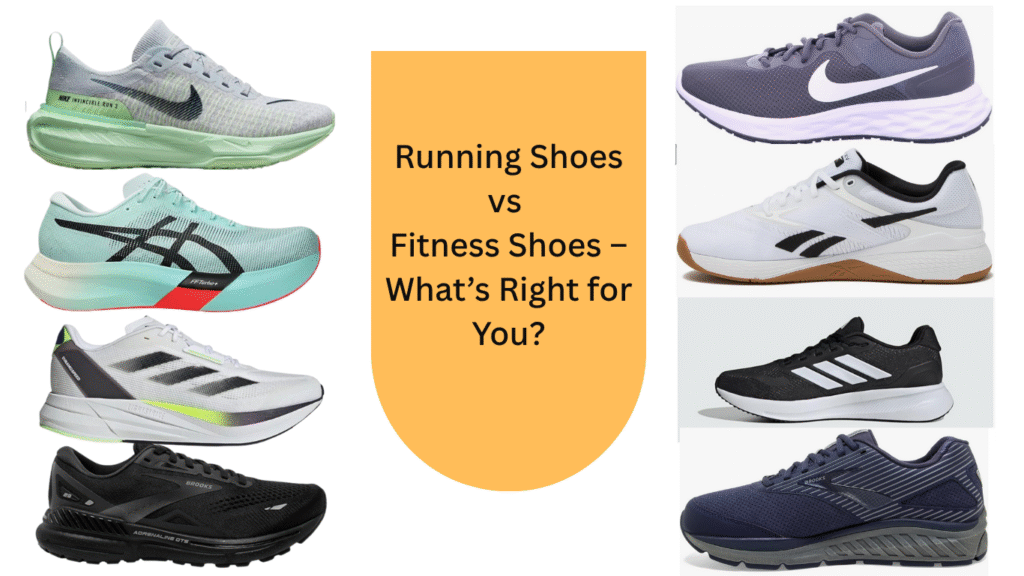
🏃♂️ What Are Running Shoes?
Running shoes are engineered for forward movement, shock absorption, and long-distance comfort. Designed to protect your joints from repetitive impact, they typically feature:
- Generous cushioning under the heel and forefoot
- A heel-to-toe drop for smooth transitions
- Lightweight materials for speed and breathability
- Ideal for road running, treadmill workouts, and races
💪 What Are Fitness Shoes?
Also called training shoes, these are made for multi-directional movement like side steps, lunges, and jumps. They work best for gym, HIIT, CrossFit, and strength training sessions. They offer:
- Flat soles for stability during lifting
- Enhanced lateral support for side movement
- Less padding, more control
- Perfect for agility workouts and circuit training
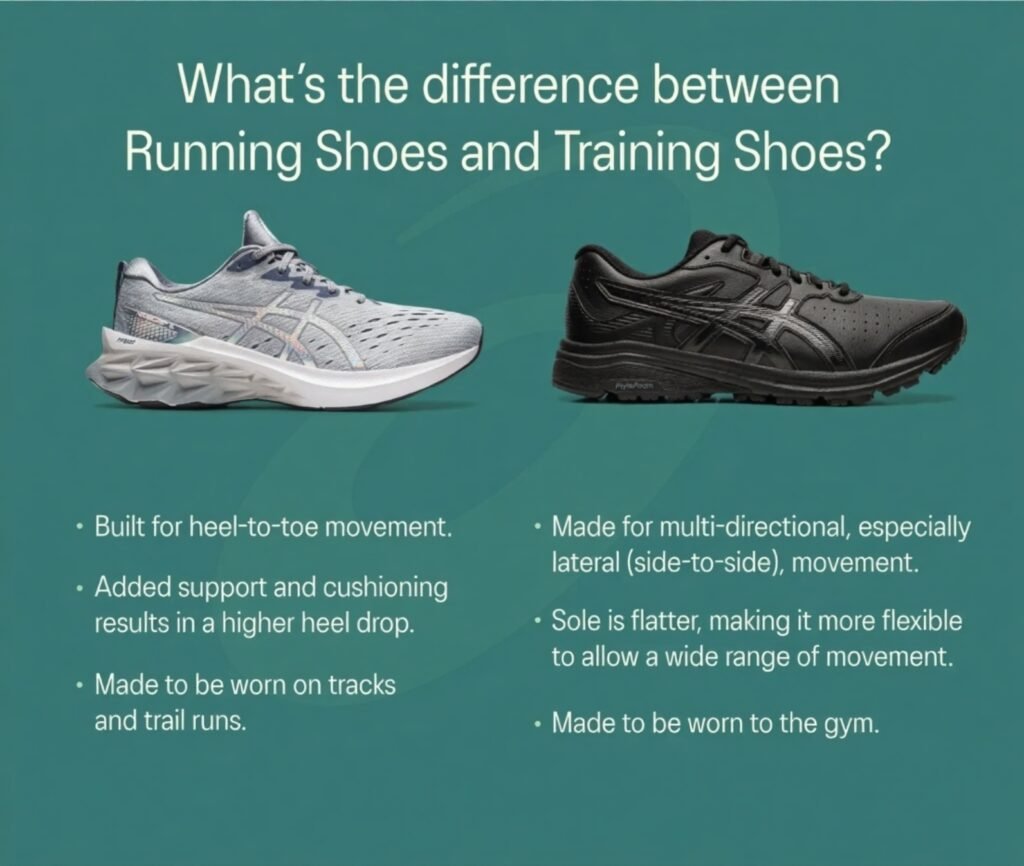
🧠 Focus Keyword Tip: Always use running shoes for cardio/running workouts and fitness shoes for strength/agility training to get the best results.
🧠 Section 2: The Science of Exercise – What’s Happening Inside Your Body
Ever wonder what’s actually happening in your body when you run? It’s like a beautifully coordinated science experiment where you’re both the scientist and the test subject!
Let me break down the coolest parts:
- Your Body’s Oxygen Party (VO2 Max) This measures how well your body uses oxygen – kind of like your engine’s efficiency rating. The higher your VO2 max, the longer and stronger you can run. Want to boost it? Try alternating between sprinting and walking – it’s like giving your lungs a workout bootcamp!
- The Fatigue Threshold That moment when your legs suddenly feel like lead? That’s your lactate threshold. The awesome part? With training, you can push this threshold further out. It’s like training your body to say “I got this!” for longer.
- Your Personal Running Style How your foot hits the ground, how your arms swing – this is your running biomechanics. Getting this right is like fine-tuning a musical instrument – when everything’s aligned, you get beautiful results with less effort.
- The Magic Happens When You Rest Here’s a secret – you don’t get stronger while running. You get stronger while recovering from running. Those rest days aren’t lazy days – they’re when your body does its repair work!
Understanding the science of exercise can help you get the most out of your training—whether you’re running laps or lifting weights.
🫀 Cardiovascular System
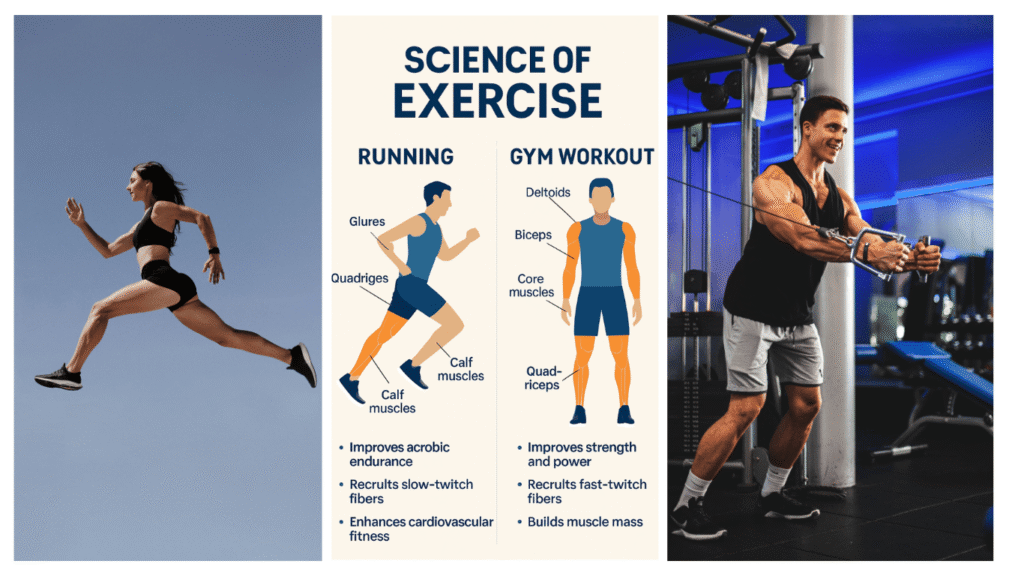
Running activates your aerobic system, improving heart rate efficiency, stamina, and lung capacity. It’s great for burning fat and boosting endurance.
Fitness training, especially HIIT and strength workouts, tap into anaerobic systems that build muscle, speed, and metabolic strength—even after your workout ends.
💪 Muscle Use
- Running targets your glutes, hamstrings, calves, and core, building slow-twitch muscle endurance.
- Fitness workouts engage fast-twitch fibers, especially in your arms, shoulders, and stabilizers, for explosive power.
🦵 Joint Protection
Wearing the wrong shoe for your activity stresses your joints. Running shoes protect your knees and spine during impact. Training shoes protect your balance and form during lateral and strength movements.
🔍 Focus Keyword Tip: The science of exercise shows that the right shoe enhances your biomechanics, reduces fatigue, and prevents injury.
💬 Section 3: Challenges of Running & How to Stay Consistent
Running is rewarding—but let’s face it—it can be tough. The challenges of running often stop people from building a consistent habit. Let’s fix that.
🚫 Top Challenges of Running
- Getting injured from the wrong shoes
- Losing motivation after a few runs
- Boredom or plateauing performance
- Time and weather constraints
- Not seeing immediate results
✅ How to Overcome Running Challenges
- Invest in the best shoes for running based on your foot type and mileage
- Follow a plan with small, trackable goals
- Mix in cross-training with fitness shoes to avoid burnout
- Use running apps like Strava or Nike Run Club to track progress
- Listen to your body, take rest days, and include recovery tools like foam rollers
🧠 Focus Keyword Tip: Tackling the challenges of running means smarter planning, the right footwear, and a strong recovery strategy.
🔚 Conclusion: Take the First Step Toward Smarter Running & Fitness
Choosing between running vs fitness shoes is more than just picking a style—it’s about choosing comfort, safety, and long-term results. By understanding the science of exercise and addressing the challenges of running, you set yourself up for success.
Whether you’re a casual jogger or a seasoned marathoner, the right shoes will support every stride, squat, and sprint.
So, tie your laces, step outside (or into the gym), and start moving—with confidence and care.


Pingback: Best Under Armour Running Shoes in 2025 - clicknownusa.com
Pingback: Best Mizuno Running Shoes in 2025 - clicknownusa.com
Pingback: Best On Running Shoes in 2025 - clicknownusa.com